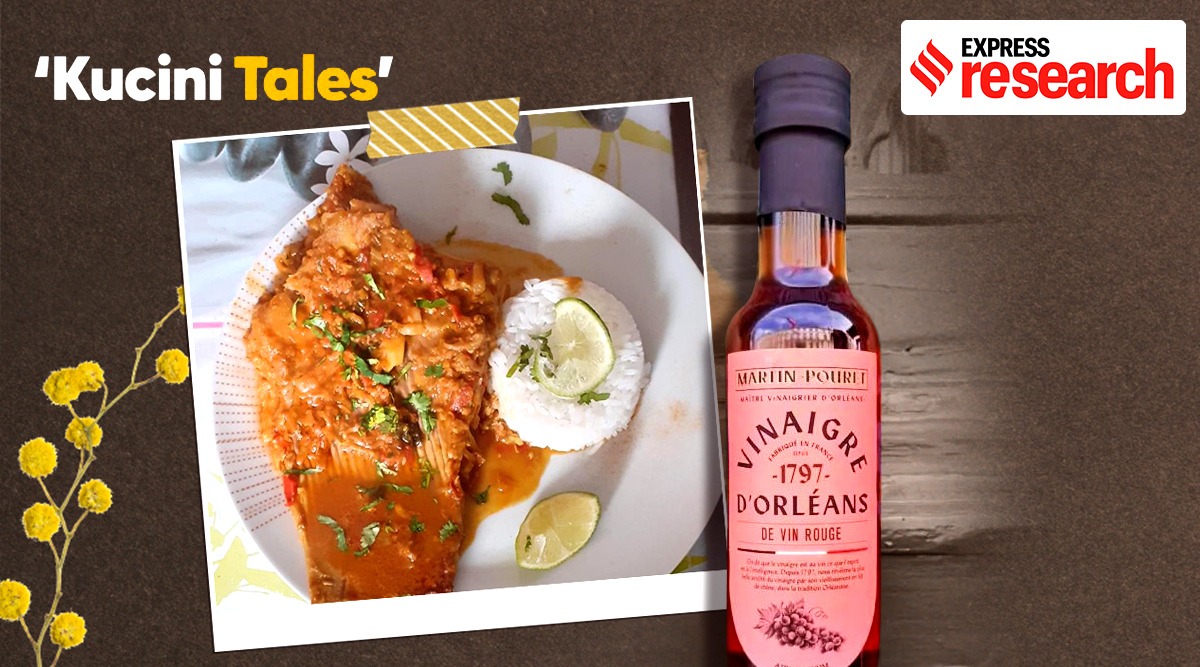
Dear reader, In the late 15th century, when the Portuguese explorer Vasco Da Gama disembarked on the coast of Calicut, he inaugurated a new moment in Indian history. The Portuguese were soon followed by the Dutch, French, Danes, and of course the British. With the opening up of sea routes, the coastal enclaves founded by the Europeans in India became hubs of cultural exchange. New languages, culture, religious tradition were born out of the interaction between different kinds of people. So were new kinds of food being cooked, out of what is known as the process of ‘creolisation’. This week, founders of the online portal, ‘Le Thinnai Kreyol’, Ananya Jahanara Kabir and Ari Gautier, start a five-part flash fiction series based on research on Indian creole food. ‘Kucini Tales’ as we call the series, plays on the Potuguese word for kitchen ‘cozinha’, which gives birth to the Tamil and Konkani ‘Kucini’ and the Malayali ‘Kushini’. Kabir and Gautier write the stories of creole India’s kucinis with a twist. These are dramatised mini-scenarios involving the fictional characters, Jean-Foutre Kattumottar and Vattalakundu Rani. Each of the articles carry a piece of short historical fiction followed by a note on the underlying historical facts. First in the series is the story of vinegar. One of the oldest condiments known to humankind, vinegar is a fermented product used to preserve and enhance the taste of food. It originated in Mesopotamia and China and came to India along the sea routes traversed by the European and Chinese explorers and traders. Consequently, cuisines in India using vinegar are those marked by cultural contact in the coastal enclaves like Goan, Pondicherry food, Calcutta Chinese, and Anglo-Indian dishes like Jhalfrezi. In this piece, Kabir and Gautier narrate the many ways in which vinegar was being discovered and recreated in different parts of India, through the story of a surprising encounter between Jean-Foutre Kattumottar and Vattalakundu Rani. Wishing you a pleasant weekend ahead. Sincerely, Adrija Roychowdhury | 




No comments:
Post a Comment